Inertia
VOLUME TWO • ISSUE SIX
Contents
Nicole Fan
Ridwanullah Sakariyah
Aalok Thakkar
Julia Biggs
Stuart Cavet
The Poem, The Blood, and The Flower
Henry Opeyemi
Charly Chow
Joy Yin
Aaron Lelito
Gillian Craig
Editor’s Letter
Dear Reader,
Every act of creation comes with its hopes, its fears, its attendant ambivalence, ever tipping the balance between progress and protraction. It is loaded with effort, replete with possibility; a promise of fulfilment for the resolute feat. More often than not, the attempt is preceded with silence. A quiet that narrows the focus, a moment to gather your composure. It is not without much pause that we can proceed.
Sometimes, however, that silence extends into stasis. Sometimes, the stasis drags. Sometimes, the drag fortifies itself, but only to resist motion before nullifying its own effort. Neither wanting nor waiting, the principle holds true: a body can “persevere in its state of being at rest”, except insofar as it is made “to change its state by forces impressed” — and even then.
In these pieces, we dwell within the ennui so unfamiliar to our unending pace of coming and going. Here, we sit outside entropy’s rhythm of syncopated dispersion — and then find in inertia some stability, at least for the moment.
Love,
Nicole
Ridwanullah Sakariyah
First Law

A body at rest, the teacher said,
will remain at rest
unless compelled otherwise.

I wrote it down without knowing
that grief obeys the same equation.

After my mother died,
the house did not rearrange itself.
Curtains hung.
Plates remained stacked.
Her slippers waited
with the patience of abandoned punctuation.

Relatives arrived like applied force,
pressing advice into our palms.
Move on.
Be strong.
Time heals.

But the air resisted.

Even dust understood loyalty,
settling each afternoon
on the arm of her favourite chair.

It took months for the kettle
to forget the exact angle of her hand.
Inertia is not laziness.
It is matter remembering its shape.

When I finally carried her clothes
to the back of the wardrobe,
the hangers swayed long after I stopped touching them.

Something had been compelled.
Something had moved.

The house has not forgiven me.
Aalok Thakkar
Two Poems on Inertia
I

The mattress takes the burden of my hip,
I seem to have forgotten how to move.
The years have dried the words upon my lip;
I live inside a fact I cannot prove.

No hand arrives to break the waiting air,
No charge to wake the silence in my skin.
I am a drought no season comes to bear,
A hollow pulling all the hollow in.

By law, a touch alone can shift the weight,
For nothing moves unless a force is laid.
The silence is a wire drawn tight and straight,
A pleading ache that I cannot evade.

No warmth has crossed this room for years,
Inertia turns to bitter salt and tears.


II

I marked this heavy stone last year,
When winter skies were cold and clear,
This season too it holds the ground,
Without a tremor or a sound.

It lacks the will to rise and go,
Or shake away the drifting snow.
It only waits for some intent—
A sudden hand, an accident.

But no one walks the lonely crest,
To put its stillness to the test.
And so it keeps the law of rest:
Untouched, untroubled, and unpressed.
Julia Biggs
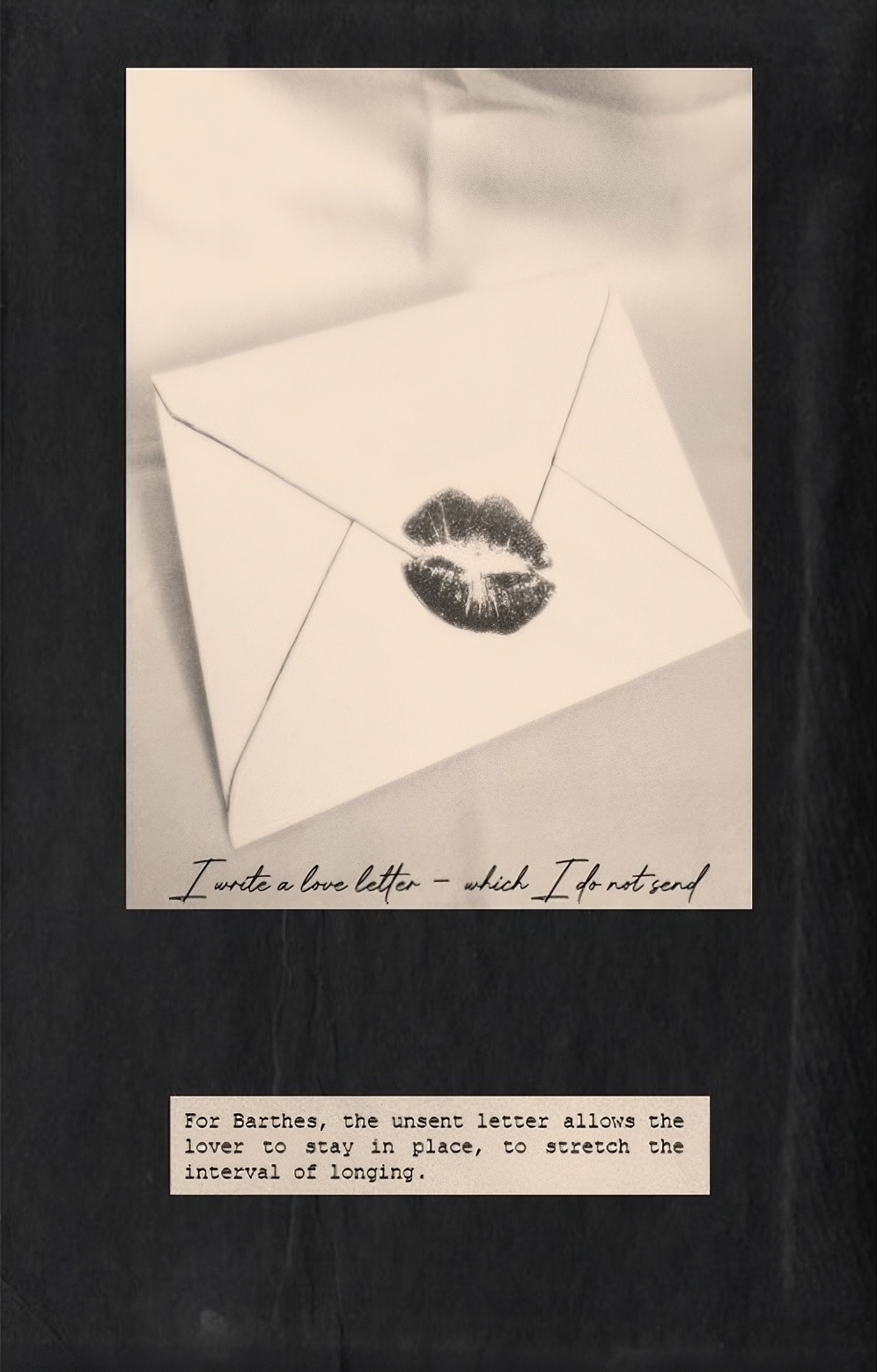
Waiting I & II

Stuart Cavet
Not Getting Hysterical
Do I want to see it, the doctor asks, and mistaking stoic indifference for casual acceptance shows it to me anyway. It vaguely resembles a spark plug, only it’s made of muscle and connective tissue (my muscle, my connective tissue); and instead of being black with engine grime, it’s pink with still-congealing blood and other bodily fluids (all mine, too, of course). He holds it in a glass case as if it’s a museum piece, one of a kind; and it is, in fact, unique and irreplaceable. I’m like an obsolete model for whom the manufacturer has long since stopped making spares.

I look away. The machines to which I’m wired flash amber and red like a dashboard all frantically lit up. I doubt the verbal assurances that I’m still roadworthy. The machines don’t lie. To me they warn that I’m low on gas and out of oil, that my wheels are out of balance, that my brakes are worn, and that all my moving parts are seized with rust and my engine, now missing a vital component, refuses to fire.

I can’t help concluding I’m uninsurable, a death-trap and worth more as scrap.
Henry Opeyemi
The Poem, The Blood, and The Flower

the poem: to live a life of colours, is to witness the redness
                      of blood, both hands full of grace, blessed with
                      unfaithfulness. I am reading to you by the flames in
                      candlelights, the children in gaza are open graveyards
                      and I am not poetic enough to write out the shape
                      of their misery. at the blooming of this garden,
                      a boy is holding a black rose, mumbling all of his
                      heartache into the open space of his father’s silhouette,
                      saying: there is blood in the poem, there is blood in the poem.

the blood: the poem is undressing the ache in our bones
                      and there is no light to examine the darkness.
                      by the dirge, a pyre of comfort is sung into our
                      pores, we understood the music by the amount
                      of blood found on the floor, here, a boy is learning
                      how to arrive early at his own funeral, to sing
                      his mother’s name as he transitions into a dove.

the flower: i am a eulogy for both the poem and the blood
                        you call upon me and a massacre unfolds before
                        your eyes, I am rootless, harvesting the sting
                        of sorrow, collecting all of the emptiness from
                        the belly of a rainbow. to know me, is to leave a part
                        of me at the entrance of a grave, two black birds
                        finding home through the chronicles of doom.
                        I asked the birds to show me a path to my mother’s arms
                        they answered with a poem, they answered with blood.
Charly Chow
Marina’s Tears
My mother, an art student, attended the Galleria Studio Morra in 1974 Naples, where performance artist Marina Abramović stood motionless for six hours at the mercy of her audience. She ran her hands over Abramović’s carefully chosen items — a rose for pleasure, a scalpel for pain, a gun for death. She watched the audience tickle, tease, cut off clothes and drizzle honey over skin. She saw a single tear slip down Abramović’s cheek as their touches turned to scratches. “Back then, I thought Marina cried for her pain,” said my mother. “Now I realise she was crying for theirs.”
Joy Yin
Moonlight Prayer
the moon lowers its bowl
and the long dog waits
beside the quiet river
my mother once dreamed
how the body remembers
the creases of your face
folding into tofu flowers
spooned with trembling syrup
hovering over a drowned pearl
we were born from silver
outside the rotten door
where the hunger begins
every prayer a small cup
opening the throat
like a cracked vessel
still the night wobbles
with the animal breathing
in the hollow of water
beneath the house
so pour your blessings
and i will drink
Aaron Lelito
The estrangement
seen by way of the body
in rapt enactment
in stoned altar
in bleached morning
in terrain recovered
from multiplicity
in bardo of initiation
hours before sun
or shade or stars
they are all one
way of undoing
outlines sprawling
through white walks
patterns everywhere
how they change
and also
how they enable flight
standing and lifting off
into concentration and abiding
Gillian Craig
I do not care for lakes
I do not care for lakes:
their dank stagnation;
their absence of momentum;
their lack of ambition.
What is there is there,
concealed but present,
trapped in reeds and mud;
the soggy suck
of hoarded sediment.
What is there stays there
lurking but confined.
We hope nothing

comes roaring out
howling let me go
make way
make way
I cannot stand this anymore
these sodden banks
are closing in on me
and I need to know
there is something
out there
outwith here outwith me,
something fresh; possible; else.

But we are not supposed
to speak of lakes this way.
We are meant to admire
and find beauty on the surface,
in the surroundings,
the reflection, the fixtures,
as though it were puddle deep:
a lovely view.
Not dignify the terror
straining the meniscus.
But I try not to tell people this.
It might unsettle.
Our Contributors
Aalok Thakkar is an Assistant Professor of Computer Science at Ashoka University and works on logic in computer science.
–
Aaron Lelito is a writer and editor from Buffalo, NY. His micro-chapbook, Secret Meetings, was published by Ghost City Press in 2025, and his poetry collection, The Half Turn, was published in 2023. His work has also appeared in Sage Magazine, Tough Poets Review, Barzakh, Santa Fe Review, SPECTRA Poets, and Tiny Wren’s Anthology: Earth: Poems of Presence and Possibility. He is Editor in Chief of Wild Roof Journal.
–
Charly Chow is a neurodivergent poet & fiction writer from Coventry, UK. She writes about love, authenticity and self-acceptance. Her recent work appears in Trash Cat Lit, Epistemic Literary, Micromance Magazine, Paragraph Planet and 101 Words. You can find her on X and Instagram.
–
Gillian Craig is a Scottish poet and author, who spent twenty years living and working in the Middle East, South East Asia and East Asia. Her poems have appeared in a wide range of publications, including New Writing Scotland, Orbis, Abridged and IAMB. She is also a children’s author and poet, with four books published by Marshall Cavendish as Gillian Spiller. She currently lives in Scotland with her daughter and is writing her first novel.
–
Henry Opeyemi is a writer, storyteller and a poet, who wants to someday sell out the O2 Arena as a performance poet. He is the author of two poetry chapbooks ‘Autopsy of Old Fractured Wounds’ (Ghost City Press 2024) and ‘The Volume of Constant Screams’ (Cat Courtyard Press 2025). His work has appeared on Poetry Column, One Poem Only, The Primer, Voice of Africa Literature, Ghost City Press and elsewhere. When he is not writing, he is teaching hearing impaired kids how to play chess.
Joy Yin is a writer and poet based in Mexico City. Her works are published or forthcoming in BRAWL Lit, Milk Candy Review, Gone Lawn, Bending Genres, and more. Joy is also the founder and EIC of Lacuna Vox, a youth literary magazine. She wishes she could bake something edible. Find her on Instagram.
–
Julia Biggs is a poet and freelance art historian from Cambridge, UK with a particular interest in found and collage poetics. Her debut pamphlet Nasty Objects was published by Salò Press in 2026, and her micro-chapbook ROLES was published by Ghost City Press in 2025. Her work has appeared in Ink Sweat & Tears, Osmosis Press, aswirl, Streetcake Magazine, Inkfish Magazine and elsewhere. Find her on Twitter/X, on Bluesky, or via her website.
–
Ridwanullah Sakariyah is an emerging international journalist, poet, and literary enthusiast whose work engages with themes of identity, faith, society, and the complexities of everyday life. A graduate of of English from Lagos State University and a passionate advocate for clear communication, he combines the rigour of journalism with the imaginative possibilities of poetry. His writings have appeared across media and literary platforms including Aké Review, Balestra, The Scribe, and a host of others, reflecting a sustained interest in storytelling, language, culture, and the human experiences that connect people across different backgrounds.
–
Stuart Cavet was previously an international lawyer, living and working across Asia and the Middle East. He now lives and writes in London. His flash has been placed or listed in numerous competitions, and has most recently appeared in Free Flash Fiction, Trash Cat Lit and Exclamation Mark. His debut novel, Something Kind Of Strange, is published by Amazon.
–
Image Credits: Backgrounds and graphics are adapted from open-source images on Unsplash.
–
The Primer was founded by Nicole Fan in the summer of 2022. She now runs it as a one-person project. Find out more about her here.
fin.
2026 The Primer © All Rights Reserved
Unauthorised use and/or duplication of this material and design without express and written permission from this site’s author and/or owner is strictly prohibited. Excerpts and links may be used, provided that full and clear credit is given to the creator and The Primer with appropriate and specific direction to the original content.

