Efflorescence
VOLUME TWO • ISSUE 5
Contents
Editor’s Letter
Nicole Fan
O
Giles Goodland
Summer Jobs
Ken Been
Metamorphosis
Bethany Cutkomp
Mattering
D. Dina Friedman
The Arbour
Melissa Mitcheson
tomato girl summer
Shannon Cates
In Season
Chelsea W
Identity
Michel van Collenburg
A Sacrifice
Vrishin Bhatia
Editor’s Letter
Dear Reader,
Enamoured with sight and sound, taste and touch, we give precedence to the brighter seasons of the year. Then, light filters through, uplifting each budding shoot with vitality and vibrancy. Then, petals unfurl, releasing themselves from the clasp of their buds to open, to flower. Then, flesh ripens and swells into gleaming fruit that tumble and roll across soft tufts of mossy grass. Then, beauty is everywhere and evident. Where is it now?
Sapped of colour, devoid of moisture, the colder days enfold the senses with a numbness difficult to apprehend. I can never seem to get warm; the chill bites away at my fingertips. But within the muted woods, there is still the frost upon the branch. Amidst these withering shoots, there lies snow upon the gravel. Amongst the pallid fields, there remains the hellebore and the winter heather. Ebbing and easing, the circadian rhythms go on beating. Life cannot be captured in a bottle. So some things will stay and other things will go — so nothingness and creation will continue to entangle, giving rise to all the beauty and the delight, all the terror and the sadness, inherent and inevitable in this world.
Efflorescence: a surrendering to change and a leaning into the burgeoning possibilities of the new. It is, on one hand, a bursting into flower and an act of blossoming out — a promise of renewal and rejuvenation. But it’s also an acceptance of the darkness necessary for maturity, a point of utter vulnerability where fragile shoots waver in the face of harsh winds and careless gestures. The pieces in this issue acknowledge and embrace both aspects of this emergence. So find the seed in the mud and the blossom in the hollow — you too are ever unfolding, ever emerging, ever itinerant in the wavering and the wandering, as you come into being in the most delicate of ways.
Love,
Nicole
POETRY / GILES GOODLAND
O
O of utterance o of address and the interjection oh, I think I could write an essay on oh, lyric utterance as a refinement of the grunt or the shriek or the cry. They flower richly as conventional wisdom converts sadness to lyric, fish-lip against the glass. Look in his sun-straining face, his coughed-up lung. Footfirst the beings burst. A lamb explains lambness, music surrounds us. Quieten. Shouldn’t I be tilting at telecommunications giants, their immaterial chords voice such energy. Oh O.
POETRY / KEN BEEN
Summer Jobs
We held paper cups of whispering crushed ice
under the juice fountains in the parentheses of July
our fingers a trick over the silvery nozzles
spraying blooms, nectar, seasons
over a piece of a winter semester that remained
just for us
its sweet runoff an orange or lime or lemon bouquet
I picked for you every afternoon when we were lovers.

Life was just like what the professors of freshman art history had shown us on slides
when the parlour door opened
and the bells hanging on a wire jingled
just the two of us behind the counter
laughing, making change
sponging up beauty splattered
on the stainless steel sink
and tile floor.

Summer was a rose fruit
I couldn’t wait for our shift to become
PROSE / BETHANY CUTKOMP
Metamorphosis
This isn’t the glow-up moth expected. Phototactic urges call her during the night, street lamps and porch lights charming her in the dark. Since emerging from anticipatory layers, maturity has only gifted her routine monotony, no climactic crest as promised by her elders. Negative introspection distorts her self-image. Moth still compares antennae at a distance. Measures her thorax in each puddle’s reflection. Oh, to become a precious, delicate thing — not a hairy klutz stepping into adulthood with hesitance. If only she hadn’t taken pupation for granted, with its orthodontics straightening mandibles to precision, transforming pimpled disproportions in secret. Dreaming of elegant wings like those of her monarch and swallowtail peers, moth hid her insecurities well — but what a lonesome eternity puberty seemed. Those silk-swaddled days made her miss the larval stage, blessed by juvenile innocence, when there’d been no fear of standing out among grubby chunky-faced peers. As a caterpillar, moth could eat and eat lush greenery without guilt pinning her to the leaves. She’d dreamed, still dreams, of someday growing up to be like the best of her own kind. Strong and stout, peculiar feathered perfection — radiant-spirited, an inner source of warmth drawing others in.
POETRY / D. DINA FRIEDMAN
Mattering
I become the song I’ve been
singing alone in this field with you
— Soham Patel
When I sing the song I’ve been singing
alone, in the garden, an earthy mix
of notes and words slipping from lips
into the humus; when I sing in the steam
of the shower — the melody, the harmony, the riffs;
when I beatbox and dance, croon and wail;
when I lay my hand on a piano chord,
as if this is the only sound that matters
until the shift into the fermata’s breathy silence;

when I sense the audience:
inside and outside of me balancing
on our uncomfortable edges, waiting
for the note that will merge our voices
into a moment of pure pitch perching
on a birthing seedling. Mattering. Only then
do I know the seeds will open;
the shoots will flourish.
PROSE / MELISSA MITCHESON
The Arbour
It’s like an elephant, Wilfred thinks. So old, this tree, that its trunk bulges; ridden with furrows and knots.
It bristles with errant twigs and balls of mistletoe. He’ll never find Papa’s stick amongst them.
He threw it too hard, watched it disappear amongst low branches. A broad staircase of overlapping discs climbs this side of the trunk, supple and flesh-toned, indicating a way up.
He begins to climb.
It’s only a stick. There are hundreds of others littering the forest floor. But this one is Papa’s, a sworn enemy who tans his hide. In Wilfred’s hand it is transformed, to shoot the Luftwaffe bombers from the sky, conjure a spirit and change base metal to gold. He has lent it power.
So up he goes, hand over hand, bare knees anointing the bark with fresh blood.
A flash of movement in the corner of one eye — his brain grapples to catch up. Birds scatter like seeds as an echoing call punctures the silence.
‘Wilfy?’
One frozen moment passes, as soundwaves disperse like spores. Then his limbs spring into action, pistoling him higher.
‘Wilf.’ Louder now, closer.
One grubby hand rests on a knot, spiralled and rutted with age. Just above, a hole opens into darkness.
He climbs in.
Wilfred’s eyes close, open, close again. No difference between the two. What is he standing on? Something broke his fall, and it was a fall — much further than he’d expected. The whole trunk must be hollow, rotten through. One experimental hand reaches out, connects with damp softness, recoils. He can hear his breath like the bellows Mum uses on the fire.
Mum — is she still out there? She’ll kill him for sure.
He listens, but rough walls grow up around his body, layered with teeming life. Their rustlings fill the space.
He blinks and looks around. Eyes now adjusted, the black shifts into grey, weaving ghostlike shadows across his vision. One hand rises to tap the bridge of his nose—a comforting gesture, miming the application of joke-shop specs, and he accompanies his swivelling gaze with robotic sounds. Now he can see in the dark like the Green Lantern; a vague, chartreuse light close by his feet willed into being.
*
Time is short. Marion crosses her arms over her body as she marches through the forest, snapping twigs with each step. Blessed boy, why can he not see? She does these things for his own good, against her instincts. ‘Spare the rod…’ isn’t that the saying? She has a duty to prepare her son for the harshness of adulthood. God knows she was unprepared for it herself, and look how that turned out. So now she does bad things for his own good, against her instincts. She’ll find him fast, slap him hard, drag him home by the ear in view of his Pa to spare him a belting. That last one almost killed her: she can still see the buckle-scar like a brand on his baby skin, and it must not repeat. People will notice — only yesterday, Mrs Gordon frowned and offered her spare room, as if she and Wilfred were in need of charity.
But if she bears the role of enforcer herself, then she won’t be as helpless when the inevitable comes. She mutters this litany of intention beneath her breath, clenching fingernails into palms. He will not run wild, even if she must close her eyes as she metes out the punishment. Her Mary Janes bloom with a patina of mud at each heavy step, sending messages through the strata of leaf litter to the mesh of living wires beneath. Wordless alerts pulse from her oblivious pores and the woodland braces, detecting the minutest of signals — scent, sound, heartbeat. The forest is a natural metropolis, filled with enemies waiting to strike.
*
It’s not fair; injustice weighs heavy on Wilfred’s stomach, like his muddy leather soccer ball, rolling around in there amongst all the half-digested sweets. The image is too much — he leans forward in the near-dark and retches. Now he sees the dim light source more clearly, directly beneath. Something growing in the base of the tree trunk. Can he reach it with a toe? Perhaps he might stretch out…
‘Wilfy?’ Startled at the closeness of his mother’s voice, his play-worn soles skid on the sheer bark walls. He is falling, skinning his palms, and his forehead connects with something sharp. She floats through to him vaguely as he lies there, but quieter now as if from the end of a long tunnel.
The glowing objects are now right beside him, and through an encroaching fog, his brain rejoices in recognition. As Wilfred touches the fungus, vibrations pass from his fingertips to their pale flesh, down through the depths of the tree’s roots and outwards to its neighbours.
This must all be a dream, his tired mind thinks, to keep him safe in the dark. He smiles in relief and closes his eyes. Under the tree, far beneath, life stirs.
*
Marion’s legs buckle and she sinks to the ground, propped against the bulbous tree. Her hand rests on a damp cushion of moss, finding its texture oddly comforting against her skin. Wilfred’s threatened to run before, and after all, it may be for the best. What kind of mother can’t protect her own son?
Lethargy creeps into her bones, and her eyelids sweep the day aside. Her own Pa’s ready fists loom from some unwary part of her mind, always poised for attack. Synapses fire, activating nerves, dilating pupils and opening pores. Her fingertips tremble against the moss, and its minutely clustered leaves taste salt and minerals from her skin, triggering their own message, passed still deeper into the soil.
Marion is nine years old in her dream. She has run to Auntie’s bedroom at the back of the bungalow, where her father never goes. She crouches in one corner, facing the wrecked bed. A universe of dots blooms from the corner opposite, right above Auntie’s head, scattered on its edges but drawing in to depthless black at the centre. Marion is afraid to look into that darkness. The air is pungent and she wonders if the black dots have caused Auntie’s sickness, creeping in to colonise her lungs with each desperate gasp. An immense clanking machine stands by the bed, tethering the woman with tubes like an animal. A mask grips her face. Marion can see her mouth through its transparency, perpetually frozen in a silent scream.
Marion is not afraid — Auntie’s love has fed her through Pa’s famine, and still the woman uses her last precious bursts of energy to sustain her niece with tales of valour — Artemisia of Caria, Boudicca, and most of all Saint Joan, ‘little more than a child herself, Marion, remember that!’
The doctor feeds her medicines and tales of his own. These potions once grew in kitchen-like laboratories, he says. It all comes from nature, he says. Marion eyes the black corner warily as the man speaks.
A sound breaks into the dream without waking her — a familiar child’s laugh. Auntie’s bedroom dissipates and for a moment Marion is standing behind the garden’s air raid shelter, a wartime relic where blossoms emerge like miracles from a bed of weeds.
Marion stirs with a last waking image in her mind: a kindly neighbour wrapping a home-made bandage to her leg. Old bread mottled blue and green like cheese, a family remedy passed as a gift.
Her eyelids flutter open, aware of her son’s heartbeat before she hears his voice.
*
Two bodies, one inside the tree and one outside, suspended in golden light like flies in amber. Spores hang in a shaft of golden sunlight — the light itself sentient. The bodies are held outside time, but the spell may be broken in an instant. One errant cloud may lower the forest roof to shift this wild room to a grey-scale lino print.

The boy’s voice breaks through.

‘Mum?’

He didn’t mean to shout it, compelled by her breathing presence close by. A bone-white hand materialises above his head, bleached by sunlight. If he can just reach out and clasp it, perhaps?

They tumble together to the ground, grazed and bleeding but poulticed in mud. The moss-bed breaks their fall.

‘Will we go home?

She tousles her son’s hair.

‘Perhaps. Or we could go visiting for a few days. That nice Mrs Gordon from the market…’

‘But Mum,’ he breaks in, springing to his feet. ‘Papa’s stick — the tree took it.’

‘A stick’s a stick, there are hundreds of them, all the same — look around you!’

He burns with frustration at the uselessness of words. How to explain?

‘That one killed monsters,’ he tries, in a small voice.

She smiles, stoops to the ground, and plucks a wand from the forest floor.

‘That was your Pa’s stick, not yours. The tree wanted it back. But this one…’

She touches it to her son’s left shoulder, then to his right, finally placing it across the boy’s upturned palm.

‘…can be anything you please.’
POETRY / SHANNON CATES
tomato girl summer
i wanted to worship
i seeded the rot
i grew a tomato plant
we
lived and breathed and
grew and breathed
greedy
i traced the imprint
of my knees in the dirt
i could feel the teeth
they broke the skin
like mine did
spilled juice and seeds
like i did
POETRY / CHELSEA W
In Season
july is rotten; peaches bruising
under the slightest touch of my skin.
at two o’clock i catch the train:
bullet from shijiazhuang to xi’an,
sink into the dry
listless heat of the fuzz,
the static and the noise of the panting
shorebird.
windows rattling past in dusty
discordance, outpouring
daylilies, the same rusty
colour of your jacket as you walk in.
i meet you in july, and

miss you in december.
watched as you left
your orange jacket, tucked in
my drawer. it grazes my frostbitten
sweaters like a ticking hourglass, like the butterfly specimens of
hole-punched tickets.
in my mind i brand
the iron to your silhouette;
the heat warms my mouth. its
sweetness is cloying, like syruped
mandarins by the gallon. it kisses roof to tongue.

when i see you next, we bask under the morning glory: fish-boned, wish-boned. rib-boned, by which we are made human,
pressed against the damp grass
in april
there is you and i —
and the ants biting our ankles,
and the orange blossom flowerbed.
VISUAL ART /
MICHEL VAN COLLENBURG
Identity
Transformation is fragmented.
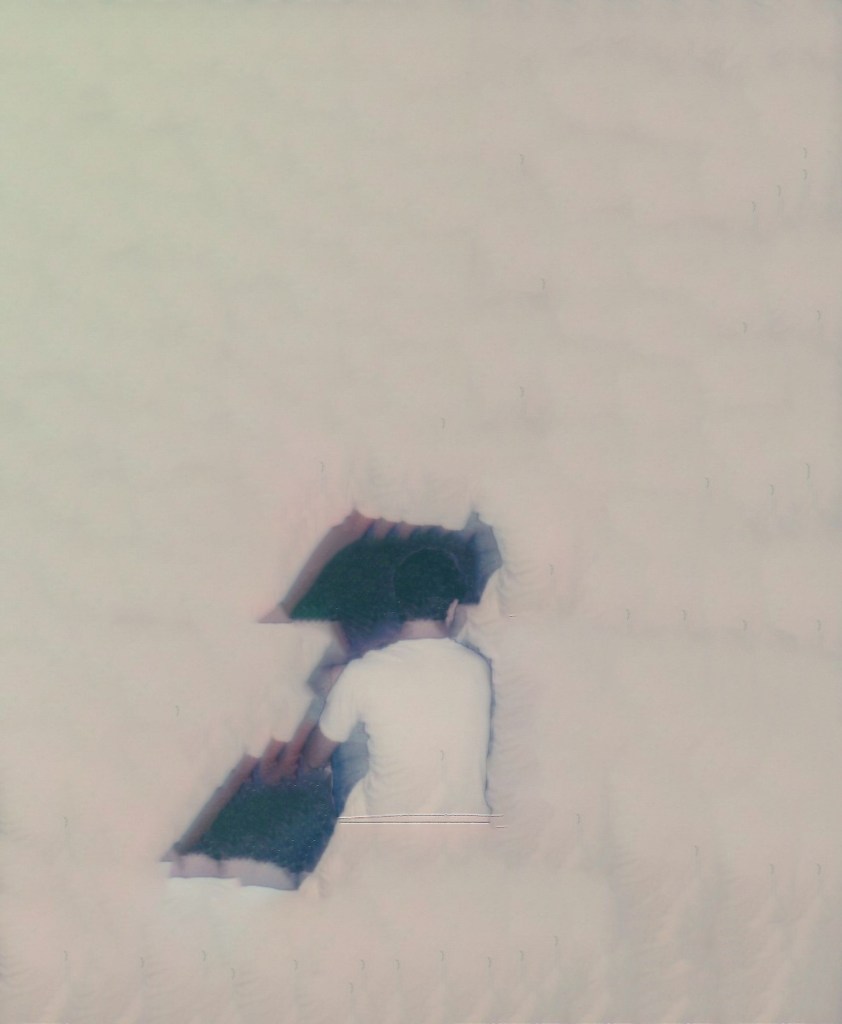
It is not a smooth line from A to B.
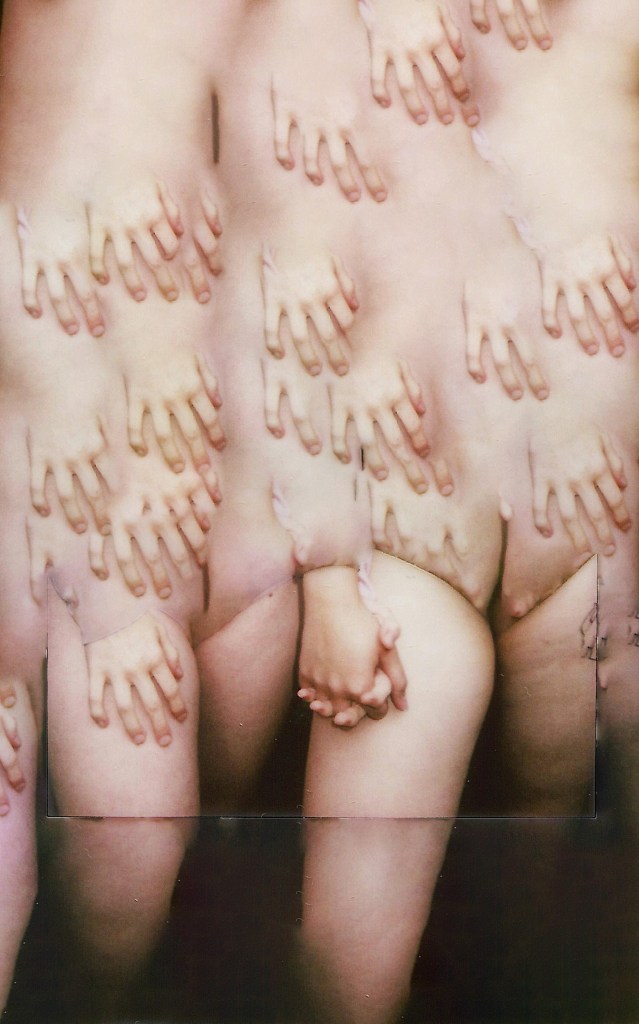
Shards of self separate themselves from ourselves.
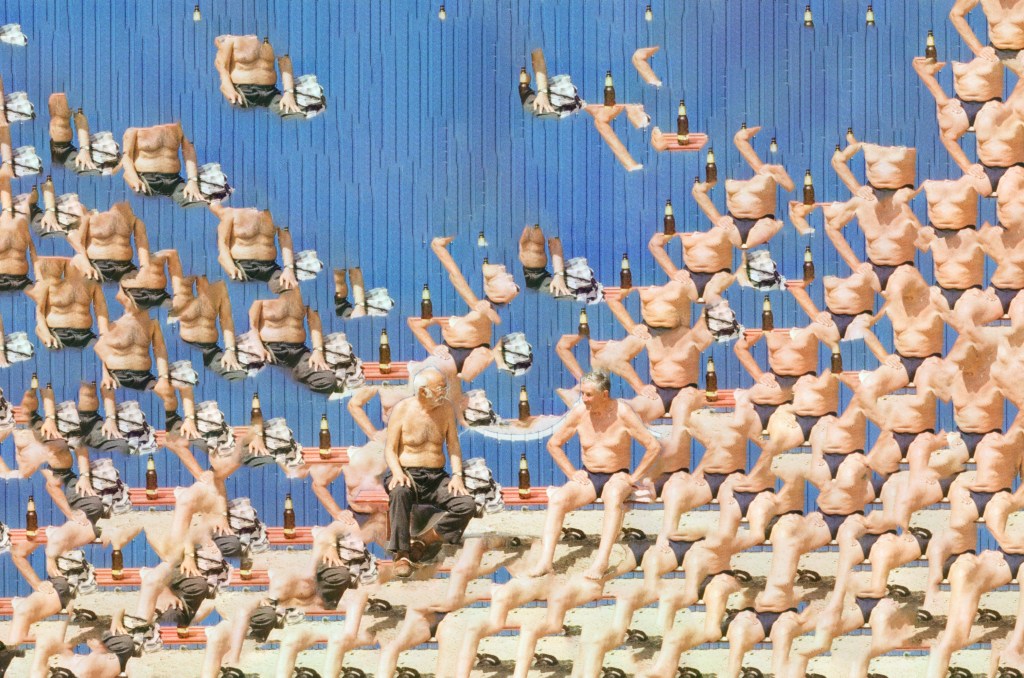
Creating a collage of our being. Of our thoughts.
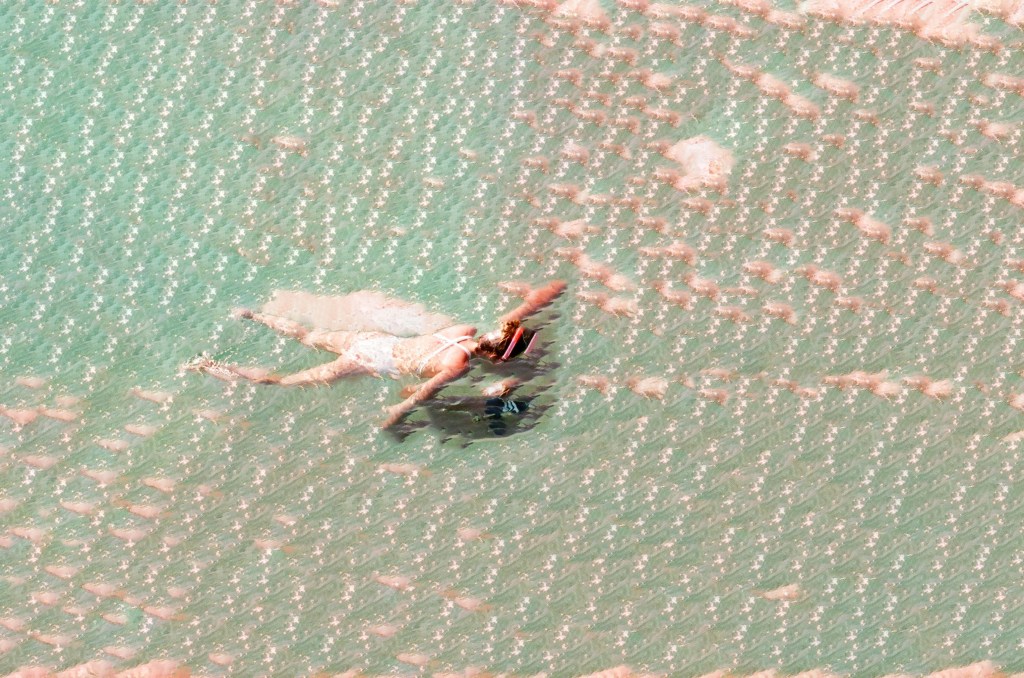
Of our identity.
POETRY / VRISHIN BHATIA
A Sacrifice
I.
Fallen leaves litter the once green garden,
traces of winter still remain
in the cold breeze that
carries the leaves away, only for

more to arrive. This never-
ending cycle torments my grandfather,
who repeatedly waters the barren surface,
hoping for spring.


II.
Out of all the seasons, autumn is the bravest,
it allows the Americans to call it fall,
just because in it, everything
does.

“The season of death!” they say, “of decay.”
Year after year, it tarnishes its own name,
just so spring can be glorious.


III.
Only what is shed, can bloom,
Only what
falls, can rise.

This, autumn understands,
and hence, the sacrifice.
Our Contributors
Bethany Cutkomp is a writer of surreal and existential works from St. Louis, Missouri. She enjoys catching chaotic vibes and bees with her bare hands. Her work appears in HAD, trampset, Full Mood Magazine, underscore_magazine, The Hooghly Review, and more. Find her through her website at bdcutkomp.wixsite.com or on social media at @bdcutkomp.
–
Chelsea W is a sixteen-year-old reader from Singapore. On her occasional forays into writing, she draws inspiration from the sunlight at five, Pinterest boards, and scenic photographs on the Internet. Her obsessions include collecting photocards, eating, and watching YouTube.
–
D. Dina Friedman’s newest books are the poetry collection Here in Sanctuary—Whirling, (Querencia Press) and the short-story collection Immigrants (Creators Press), which was first runner up in the short-story category for the Eric Hoffer Award. Her previous books include two YA novels, Escaping Into the Night (Simon and Schuster), Playing Dad’s Song (Farrar Straus Giroux) and one book of poetry, Wolf in the Suitcase (Finishing Line Press). Dina has published in over a hundred literary journals including Rattle, Salamander, The Sun, Mass Poetry, Lilith, and Rhino. She has received two Best of the Net and four Pushcart Prize nominations.
–
Giles Goodland’s books include Of Discourse (Grand Iota 2023), A Spy in the House of Years (Leviathan, 2001), Capital (Salt, 2006), Dumb Messengers (Salt, 2012) and The Masses (Shearsman, 2018). Civil Twilight was published by Parlor Press in 2022. He has worked as a lexicographer, editor, and bookseller, and teaches evening classes on poetry for Oxford University’s department of continuing education. He lives in West London.
–
Ken Been’s poetry has been published or is forthcoming in numerous journals and anthologies. His most recent placements include LIT Magazine, The Opiate, Aethlon, Dodging The Rain, New Feathers Anthology, Griffel, The RavensPerch and The Metaworker Literary Magazine. Over the years, his work has also been featured in many other publications. He is from Detroit, Michigan, USA where he laboured at many interesting summer jobs many years ago. His favourite job (ever) was working in a machine shop making wrought iron railing.
–
Melissa Mitcheson holds an Open University MA in Creative Writing. She won the short story category of the Retreat West Prize 2022 with Rachel’s Mother, subsequently published in their Swan Song anthology 2023. It was previously longlisted for the Dear Damsels Women & Writing Collection 2021 and the Exeter Story Prize 2022. Her microfiction has also appeared in Erro Press’ 2023 anthology Flint. Debut novel The Freiburg Miracle, a Page Turner Awards 2022 finalist and longlisted for the Yeovil Literary Prize 2023, is currently out for query. Melissa is working on her second novel.
–
Michel van Collenburg is an omnivorous creator in the fields of visual art, photography and music composition. Their work focuses on identity, gender (politics), daily life and leans heavily on the idea and the craft of collaging. Both in image, and in sound. The starting point or central idea being that we are all just fragments, of our upbringing, our experiences, our imagination… just as society as a whole is fragmented. This leads to often kaleidoscopic works that are meant to both challenge and alienate audiences. Michel is non-conforming in all sorts of ways: in their work, in gender and in life. Born in 1972 in Schiedam, a town close to Rotterdam in the Netherlands, they now live and work in Nijmegen and in Berlin.
–
Shannon Cates, a UX designer living in Annapolis, Maryland, finds comfort in rainy days and the written word. When not crafting digital experiences, she’s immersed in poetry, often with her cat by her side. Her work has been published in Humana Obscura, Flora Fiction, and Bodega Magazine among other journals.
–
Vrishin Bhatia is an Indian writer of poetry, fiction, and films. Currently, he is pursuing a MA in Screenplay-Writing from the Film and Television Institute of India, situated in Pune. His writing focuses on the spectacle found in the mundane, and the intricacies of domestic life. He loves a good book, winter, coffee, and basketball.
–
Image Credits: Backgrounds and graphics are adapted from open-source images on Unsplash.
Our Editors
Nicole Fan is a multidisciplinary creative with a love for the written word. She graduated with a Master’s from the University of Oxford and a BA from UCL. She now works in journalism. Find out more at nicole-fan.super.site.
Jessica Peng lives and writes in London. In 2022 she graduated from UCL with an English degree and took a job in the arts. She writes about culture and other mundanities on her Substack and edits poetry at The Primer.
fin.
2024 The Primer © All Rights Reserved
Unauthorised use and/or duplication of this material and design without express and written permission from this site’s author and/or owner is strictly prohibited. Excerpts and links may be used, provided that full and clear credit is given to the creator and The Primer with appropriate and specific direction to the original content.
 The Primer